
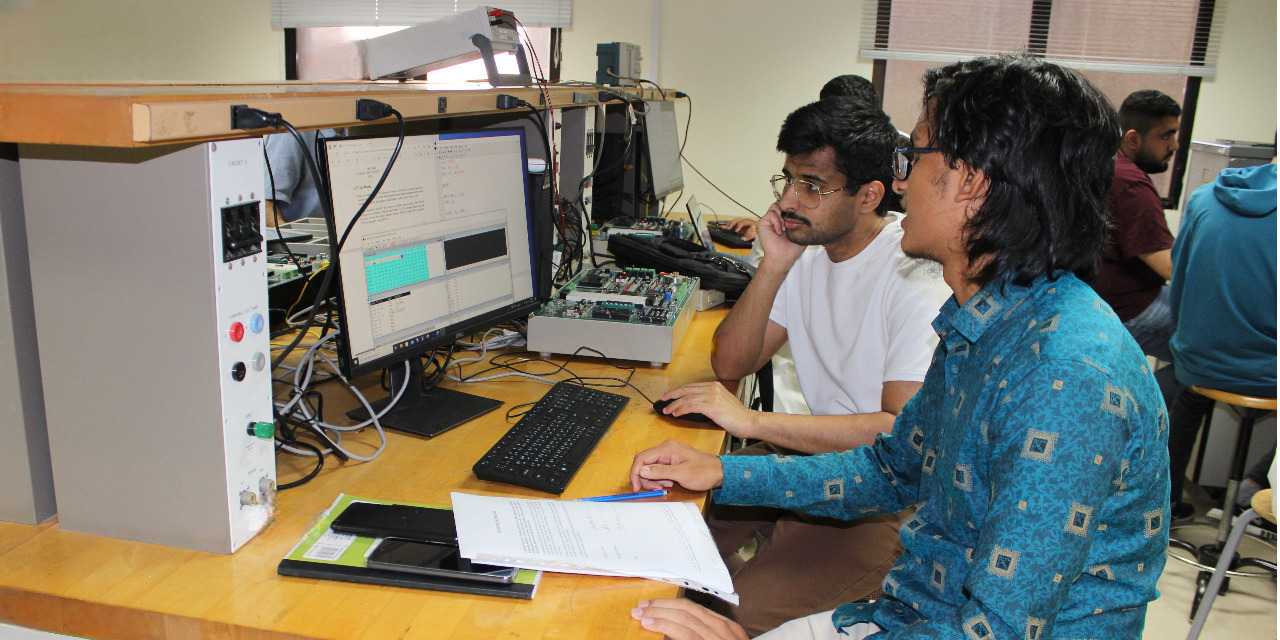
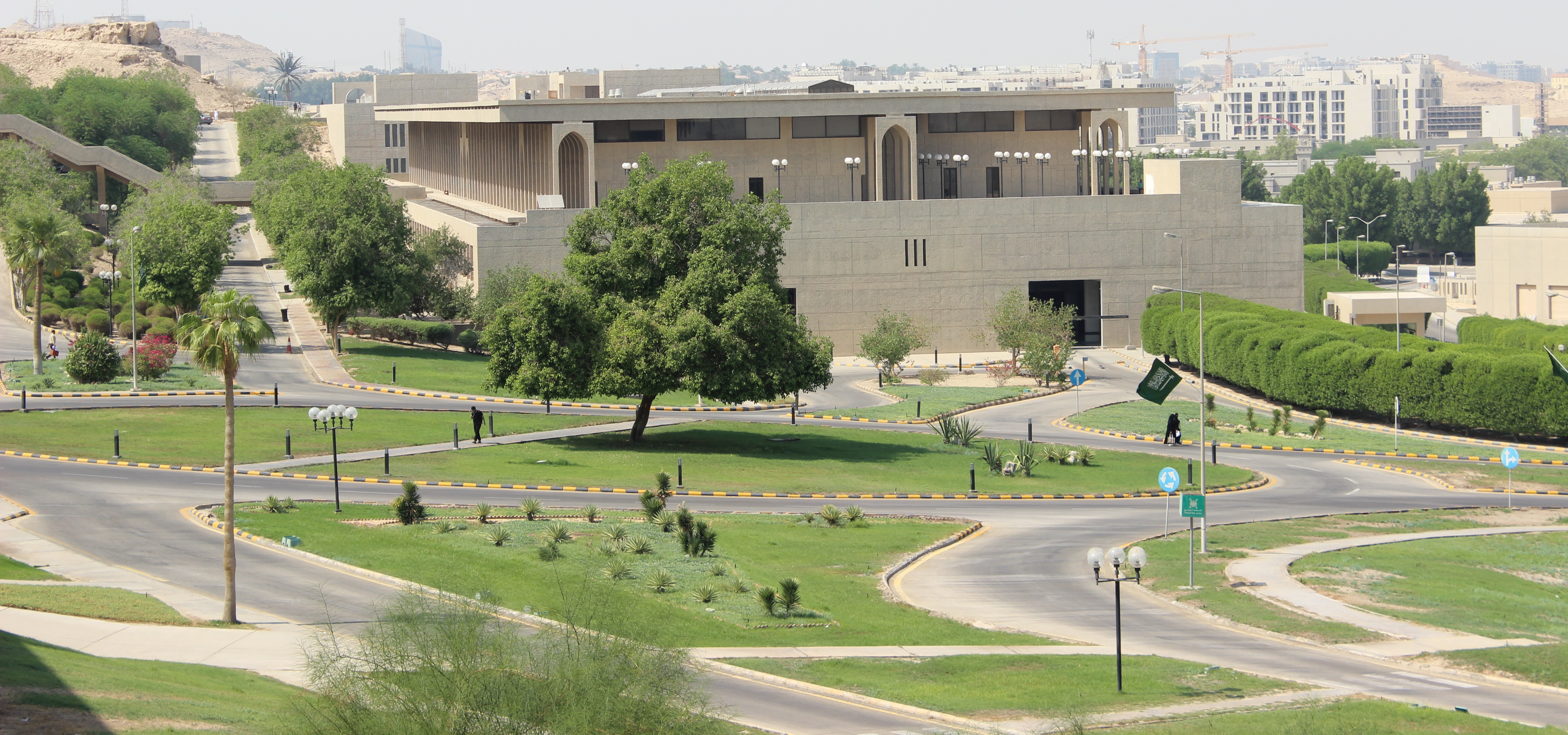
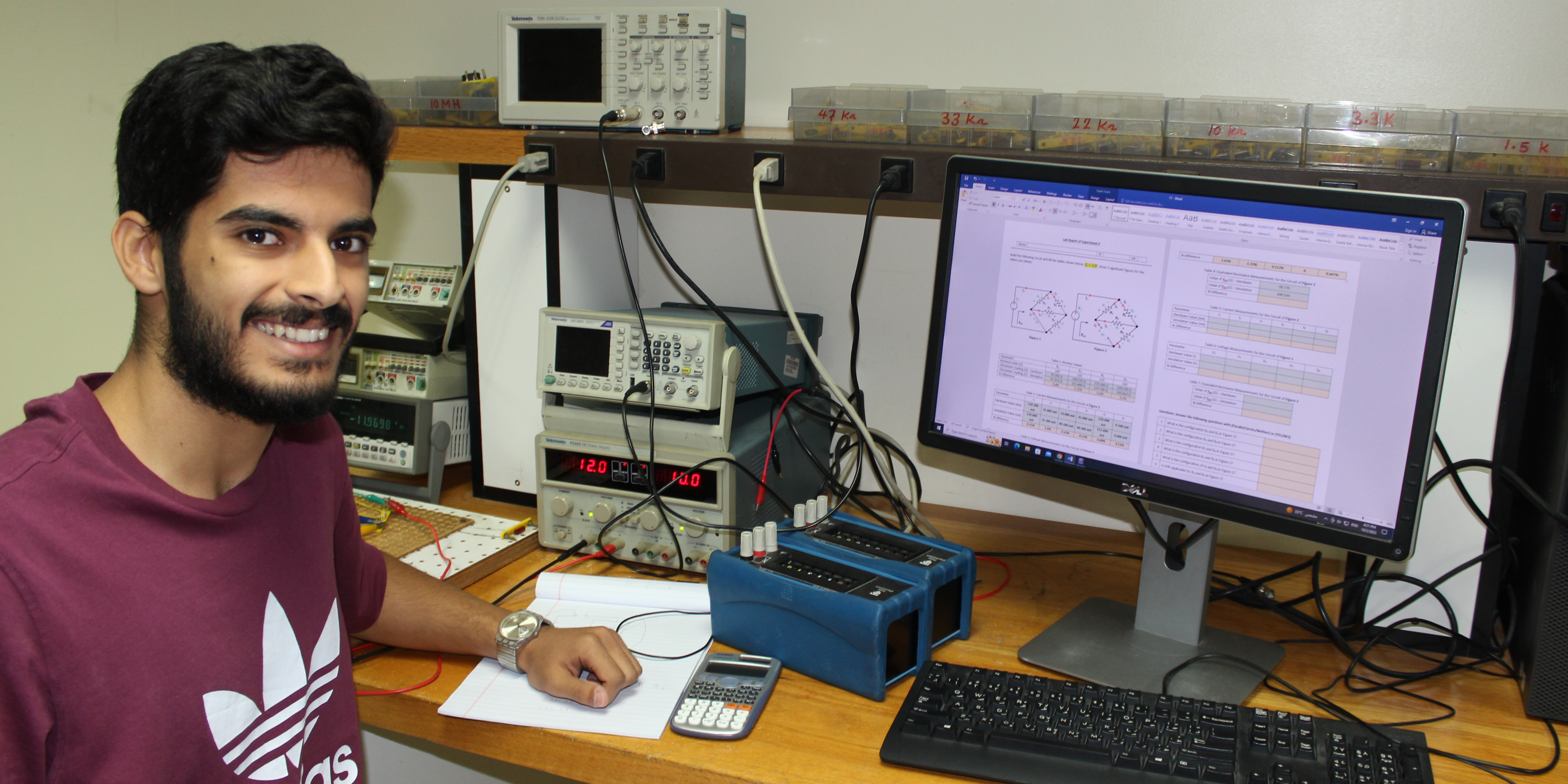

The Electrical Engineering department at KFUPM came into existence with the establishment of the University of Petroleum & Minerals in 1967. It is one of the largest departments in the University with an average number of students being approximately 900, 16% of whom are in the graduate program. The department provides 2 four-year undergraduate programs, Bachelor of Science in Electrical Engineering and Bachelor of Science in Electrical Engineering and Physics. The graduate program offers Master of Science and Master of Engineering in Electrical Engineering, Master of Science in Telecommunication Engineering, Master of Sustainable and Renewable Energy, Master of Wireless Communication Networks, and Ph.D. in Electrical Engineering.
The department has about 61 full-time faculty members in 6 specialized areas of research. The Groups in the department are: Energy Systems, Communications, Electronics, Control Systems, Electromagnetics, and Digital Signal Processing. Additionally, a pool of experienced engineers and technicians maintain more than 30 laboratories in the department.
To be globally known for skillful graduates and quality research with focus on national needs.
On November 26, 2025, the Electrical Engineering (EE) Department at King Fahd University of Petroleum & Minerals (KFUPM) hosted a seminar titled “RIS-Aided User Communication and Localization Under the Influence of Electromagnetic Interference.” The seminar was delivered by Dr. Ali Arshad Nasir, Associate Professor in the EE Department.
The talk focused on Reconfigurable Intelligent Surfaces (RISs) as a promising technology for improving both communication throughput and localization accuracy in next-generation wireless networks. While RIS-enabled systems can significantly enhance performance, the seminar highlighted that many existing studies overlook the impact of uncontrollable electromagnetic interference (EMI) impinging on the RIS—an effect that can severely degrade system reliability.
Dr. Nasir presented an EMI modeling framework that captures key interference characteristics and quantifies how EMI affects critical system metrics, including the achievable data rate, Position Error Bound (PEB), and localization Root-Mean-Square Error (RMSE). Simulation results showed that, compared with EMI-blind configurations, an EMI-aware RIS design can recover most of the communication-rate loss while substantially improving localization performance—reducing both PEB and RMSE.
Attendees gained practical insights into how EMI-aware RIS configurations can be designed and evaluated for real-world deployments, and how interference modeling can guide joint optimization of communication and positioning performance.
The following are the highlights of the event:


RF Rectifier Circuits for Energy Harvesting: Design, Challenges, and Applications
Techno-Economic Optimization of Integrated Energy Hubs under Uncertainty: A Risk-Aware Case Study
The Electrical Engineering Department (EE) at KFUPM provides a world-class education and innovative learning experiences for both undergraduate and graduate students.
Click on the following button to access online admissions application portal :