
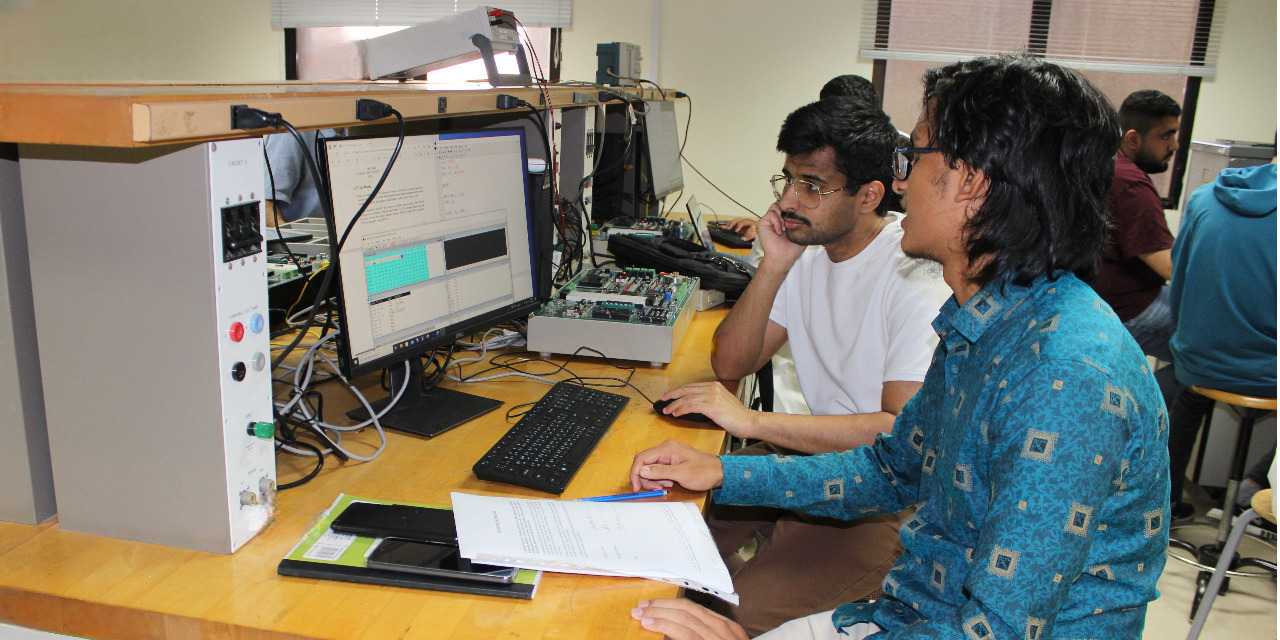

The Electrical Engineering department at KFUPM came into existence with the establishment of the University of Petroleum & Minerals in 1967. It is one of the largest departments in the University with an average number of students being approximately 900, 16% of whom are in the graduate program. The department provides 2 four-year undergraduate programs, Bachelor of Science in Electrical Engineering and Bachelor of Science in Electrical Engineering and Physics. The graduate program offers Master of Science and Master of Engineering in Electrical Engineering, Master of Science in Telecommunication Engineering, Master of Sustainable and Renewable Energy, Master of Wireless Communication Networks, and Ph.D. in Electrical Engineering.
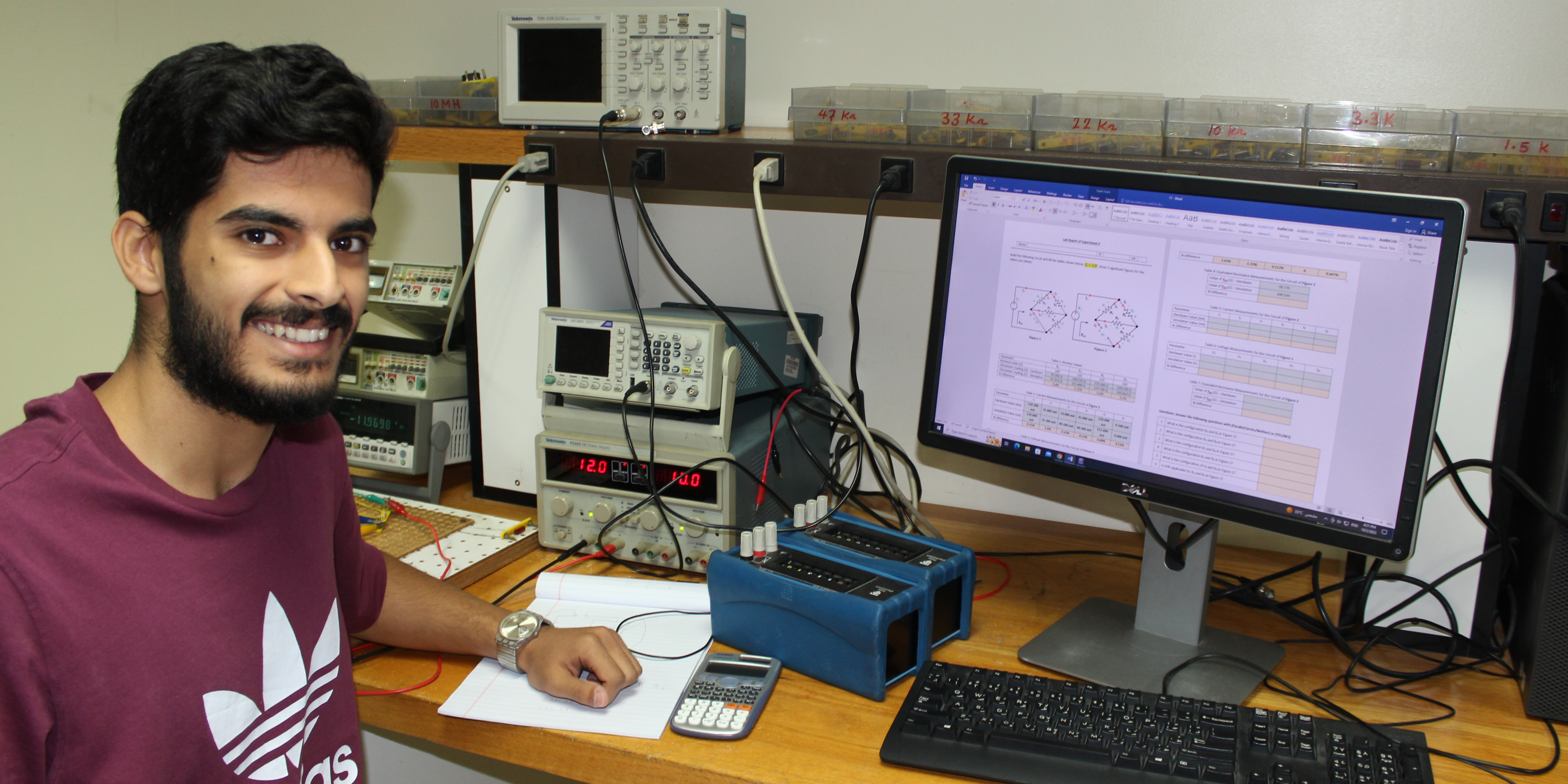
The department has about 61 full-time faculty members in 6 specialized areas of research. The Groups in the department are: Energy Systems, Communications, Electronics, Control Systems, Electromagnetics, and Digital Signal Processing. Additionally, a pool of experienced engineers and technicians maintain more than 30 laboratories in the department.
To be globally known for skillful graduates and quality research with focus on national needs.
On January 21, 2026, a seminar titled “Neuromorphic Electronic Devices for Spiking Neural Networks” was delivered by Prof. Joon Young Kwak (Division of Electronic and Semiconductor Engineering, Ewha Womans University, Seoul, Korea) at the Electrical Engineering Department, KFUPM.
The seminar addressed the growing demand for high-throughput data processing and the intrinsic limitations of conventional von Neumann architectures, particularly in terms of latency and energy efficiency. Prof. Kwak introduced neuromorphic computing, which is an event-driven paradigm inspired by biological signaling, as a promising route to overcome these challenges through hardware that can emulate synaptic weight modulation and neuronal spiking dynamics.
The talk then highlighted key electronic-device research directions based on emerging materials and architectures that enable efficient spiking neural network (SNN) operation. It also discussed interface circuits designed to drive emerging material-based neuromorphic neuron and synapse device arrays, demonstrating pathways toward scalable and low-power SNN hardware platforms.
The following are the highlights of the event:
4331b1fd-aa43-4ff7-be16-ac236ae1d504.jpg?sfvrsn=7eb3cefa_1)
658d3923-7195-4d28-914d-3a6be7ce4056.jpg?sfvrsn=44a88271_1)
RF Rectifier Circuits for Energy Harvesting: Design, Challenges, and Applications
Techno-Economic Optimization of Integrated Energy Hubs under Uncertainty: A Risk-Aware Case Study
The Electrical Engineering Department (EE) at KFUPM provides a world-class education and innovative learning experiences for both undergraduate and graduate students.
Click on the following button to access online admissions application portal :