
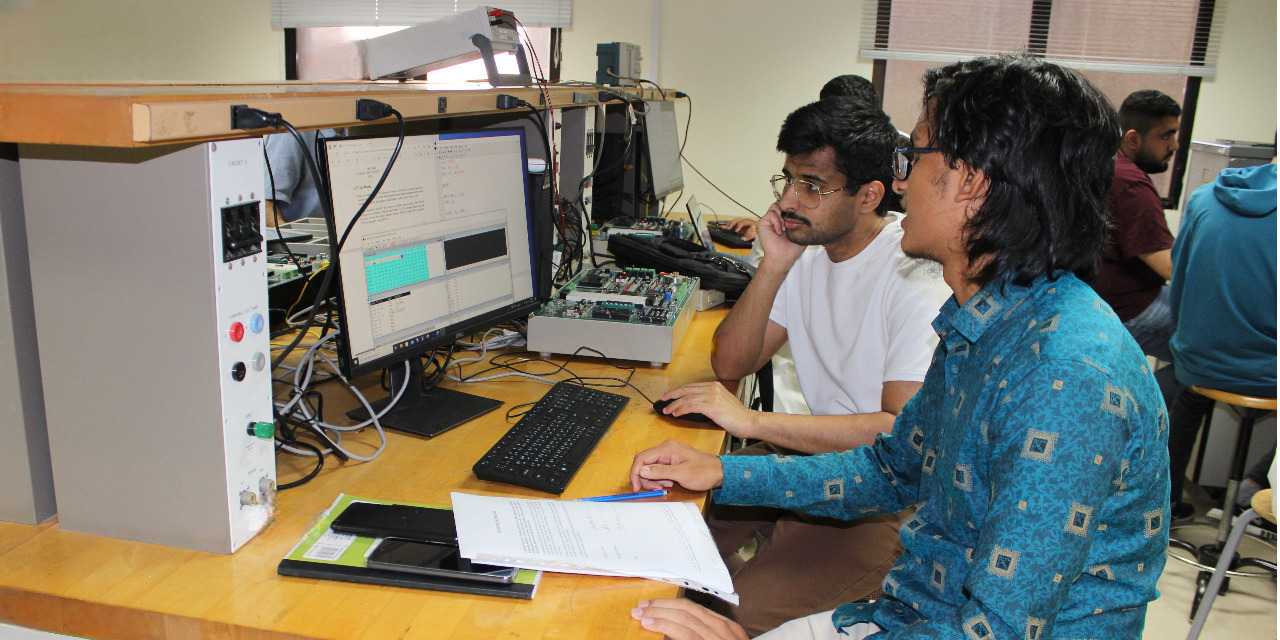

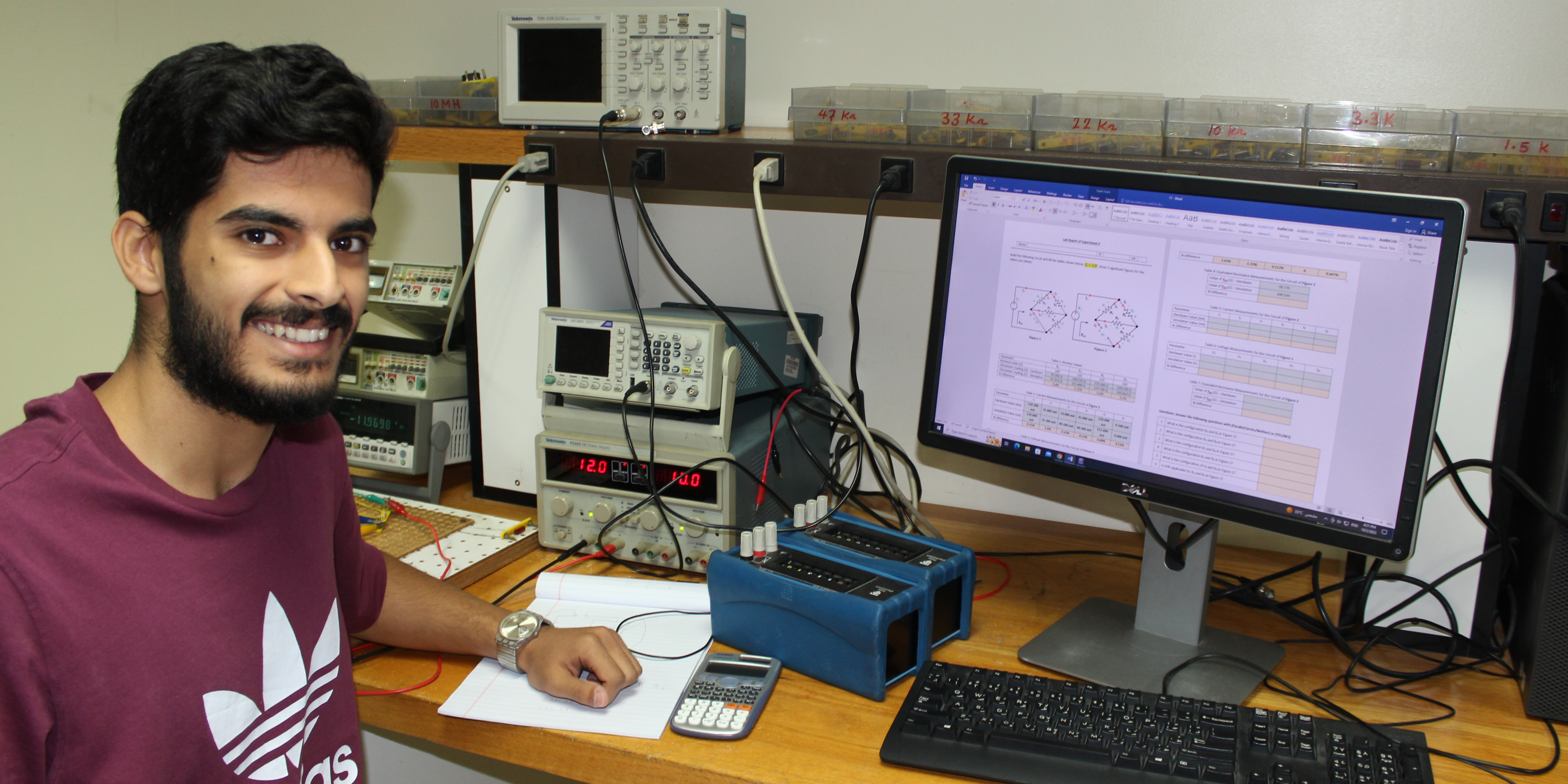

The Electrical Engineering department at KFUPM came into existence with the establishment of the University of Petroleum & Minerals in 1967. It is one of the largest departments in the University with an average number of students being approximately 900, 16% of whom are in the graduate program. The department provides 2 four-year undergraduate programs, Bachelor of Science in Electrical Engineering and Bachelor of Science in Electrical Engineering and Physics. The graduate program offers Master of Science and Master of Engineering in Electrical Engineering, Master of Science in Telecommunication Engineering, Master of Sustainable and Renewable Energy, Master of Wireless Communication Networks, and Ph.D. in Electrical Engineering.
The department has about 61 full-time faculty members in 6 specialized areas of research. The Groups in the department are: Energy Systems, Communications, Electronics, Control Systems, Electromagnetics, and Digital Signal Processing. Additionally, a pool of experienced engineers and technicians maintain more than 30 laboratories in the department.
To be globally known for skillful graduates and quality research with focus on national needs.
On April 14, 2026, the Electrical Engineering Department at the College of Engineering and Physics hosted a seminar titled “Quantum Electronics at Room Temperature,” delivered by Dr. Faris Abualnaja, Assistant Professor in Electrical Engineering at King Fahd University of Petroleum and Minerals (KFUPM). The seminar was held in Building 59.
During the seminar, Dr. Abualnaja discussed the emergence of quantum technologies as a promising pathway beyond the limitations of Moore’s law, where quantum effects dominate at the nanoscale. He introduced recent advancements in room-temperature quantum electronic devices, particularly focusing on single-electron and double quantum dot transistors based on dopant atoms in silicon dioxide (SiO₂).
Dr. Abualnaja explained key observed phenomena such as Coulomb oscillations, Coulomb diamonds, and charge stability diagrams at room temperature (290 K). He further described how these behaviors can be modeled using anharmonic Morse potentials, and demonstrated how coupled quantum dots can emulate a quantum Szilard engine, linking quantum transport with information entropy.
In addition, the seminar highlighted the broader implications of these findings for the development of scalable quantum electronic devices. Dr. Abualnaja emphasized the potential of such technologies to enable practical quantum systems operating at room temperature, paving the way for advancements in quantum sensing, computing, and nanoelectronic applications.
The following are the highlights of the event:


RF Rectifier Circuits for Energy Harvesting: Design, Challenges, and Applications
Techno-Economic Optimization of Integrated Energy Hubs under Uncertainty: A Risk-Aware Case Study
The Electrical Engineering Department (EE) at KFUPM provides a world-class education and innovative learning experiences for both undergraduate and graduate students.
Click on the following button to access online admissions application portal :