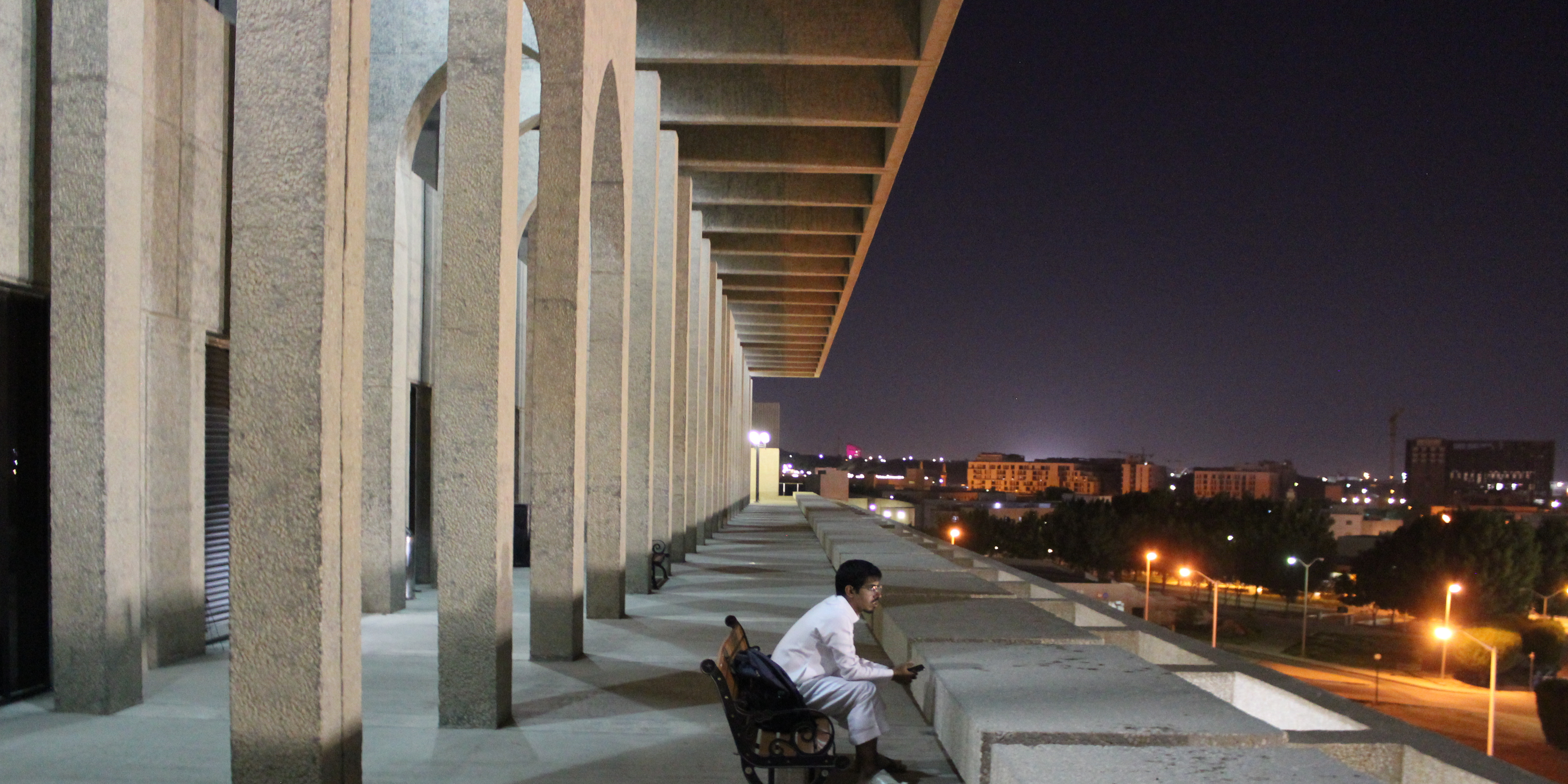
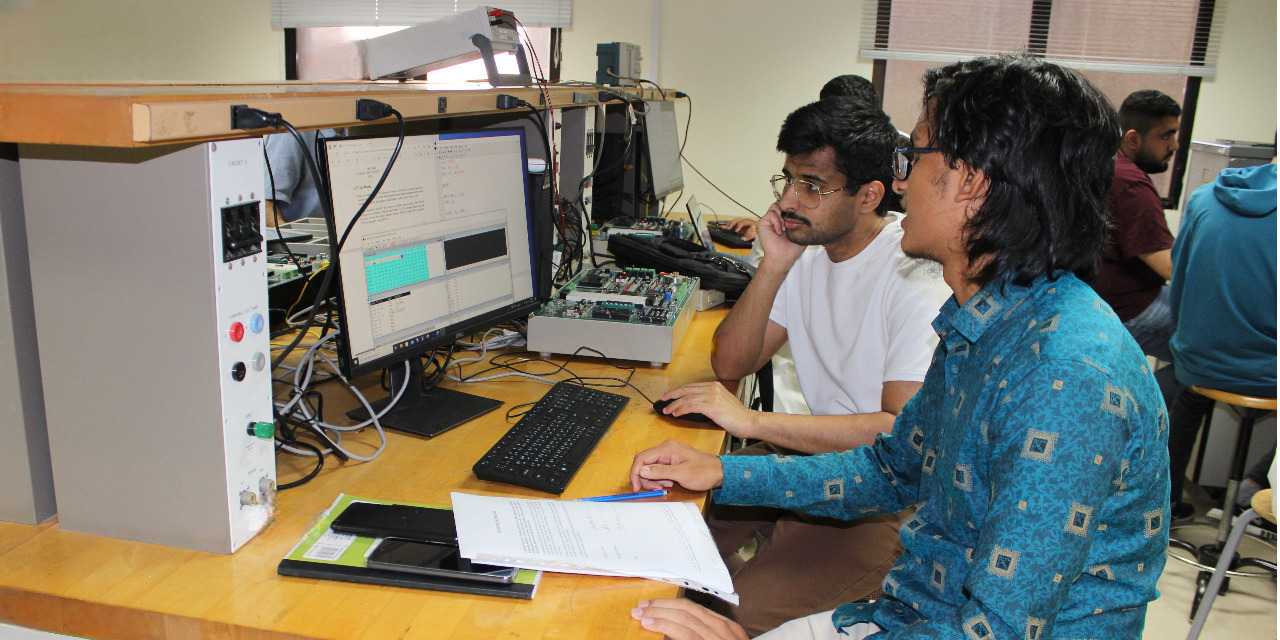
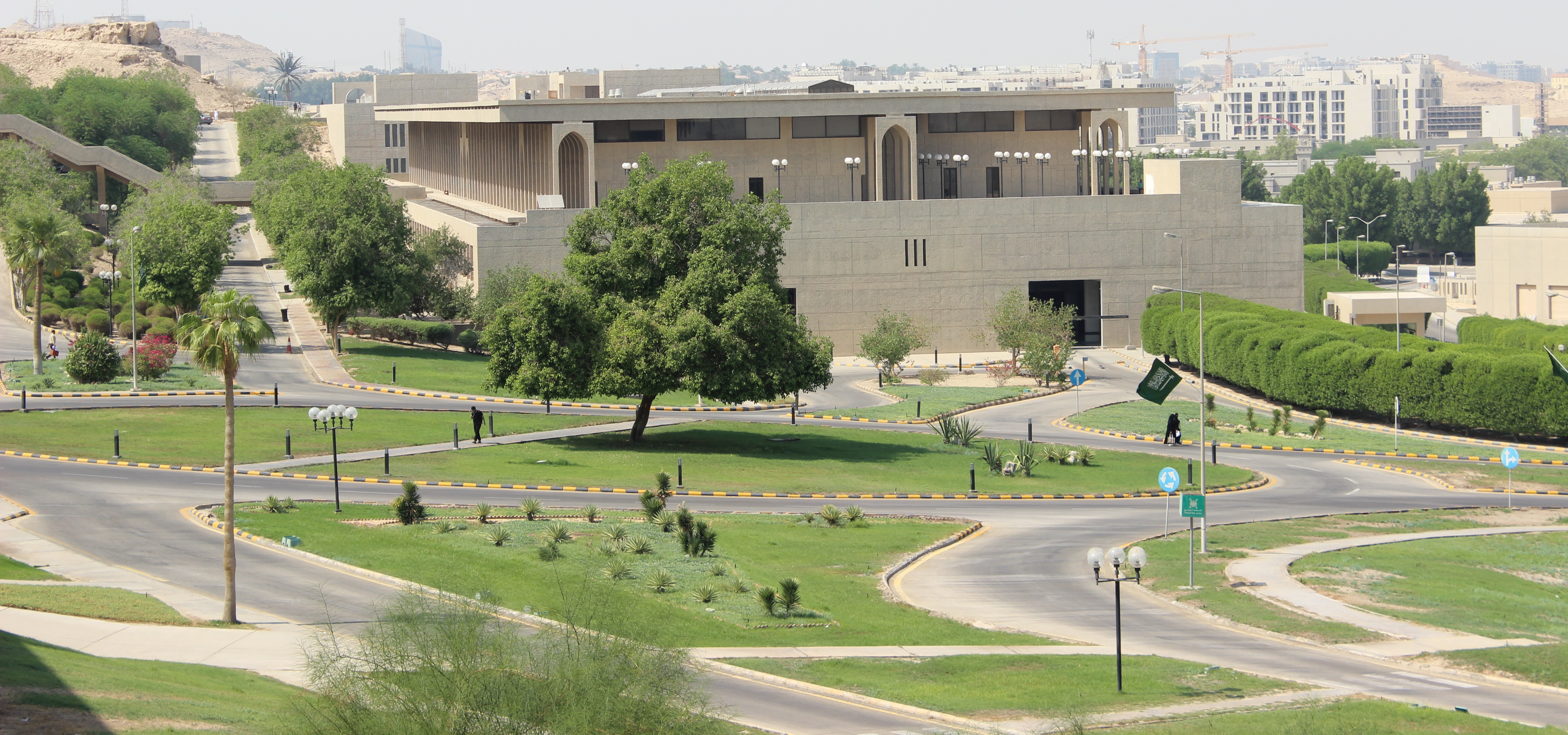
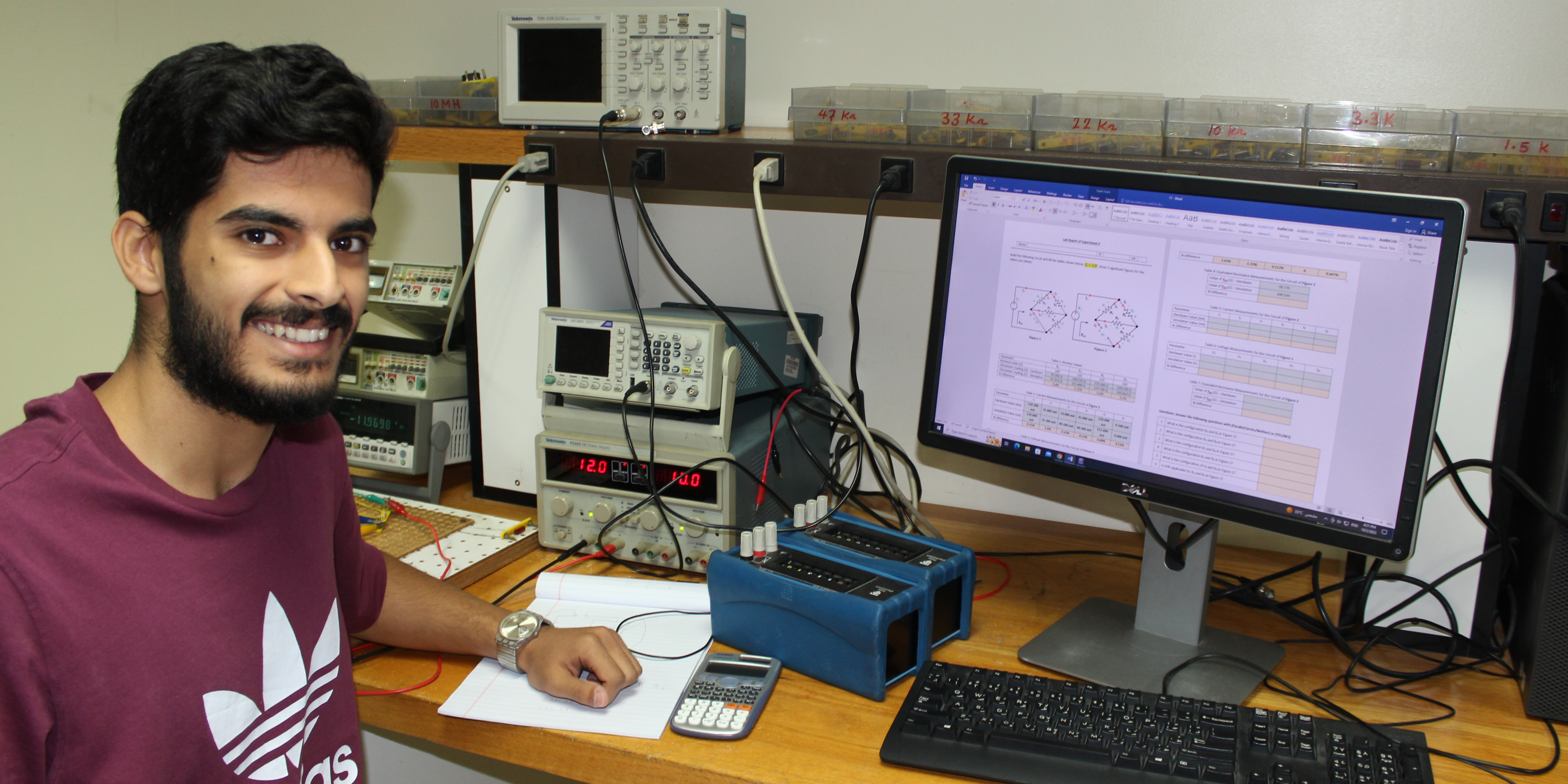

The Electrical Engineering department at KFUPM came into existence with the establishment of the University of Petroleum & Minerals in 1967. It is one of the largest departments in the University with an average number of students being approximately 900, 16% of whom are in the graduate program. The department provides 2 four-year undergraduate programs, Bachelor of Science in Electrical Engineering and Bachelor of Science in Electrical Engineering and Physics. The graduate program offers Master of Science and Master of Engineering in Electrical Engineering, Master of Science in Telecommunication Engineering, Master of Sustainable and Renewable Energy, Master of Wireless Communication Networks, and Ph.D. in Electrical Engineering.
The department has about 61 full-time faculty members in 6 specialized areas of research. The Groups in the department are: Energy Systems, Communications, Electronics, Control Systems, Electromagnetics, and Digital Signal Processing. Additionally, a pool of experienced engineers and technicians maintain more than 30 laboratories in the department.
To be globally known for skillful graduates and quality research with focus on national needs.
On February 10, 2026, a seminar titled “Trustworthy AI for the Grid: Verification-Informed Neural Networks for the ACOPF Problem” was delivered by Dr. Maad Alowaifeer (Assistant Professor, Electrical Engineering Department, KFUPM | Acting Director, SDAIA–KFUPM JRC for Artificial Intelligence) at the Electrical Engineering Department, KFUPM.
During the seminar, Dr. Alowaifeer discussed the growing need for AI solutions that can support power-system operation without compromising safety. He explained that many learning-based approaches may produce fast results, but can still violate critical operational constraints—an issue that limits their use in real-time grid applications.
Dr. Alowaifeer then presented a verification-informed neural-network approach and described how verification can be incorporated into the training process to reduce worst-case violations. He also highlighted how the proposed framework leverages mathematical relaxations to enforce constraints more reliably, and shared experimental observations showing improved feasibility compared to standard black-box models.
The following are the highlights of the event:


RF Rectifier Circuits for Energy Harvesting: Design, Challenges, and Applications
Techno-Economic Optimization of Integrated Energy Hubs under Uncertainty: A Risk-Aware Case Study
The Electrical Engineering Department (EE) at KFUPM provides a world-class education and innovative learning experiences for both undergraduate and graduate students.
Click on the following button to access online admissions application portal :