
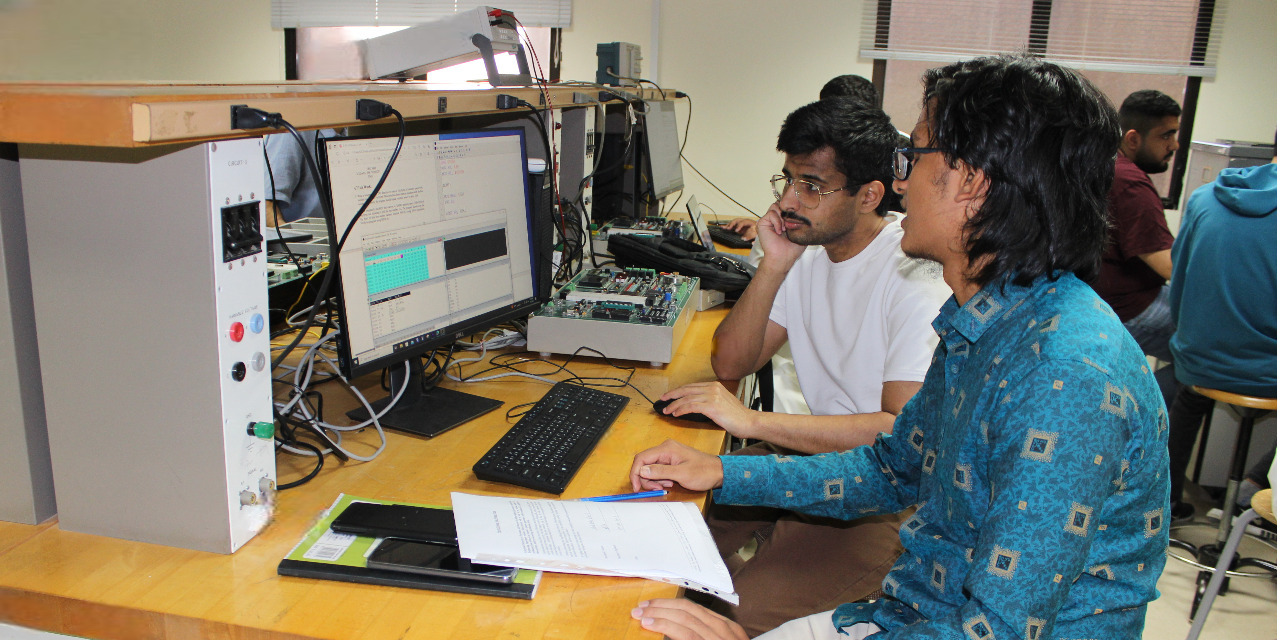
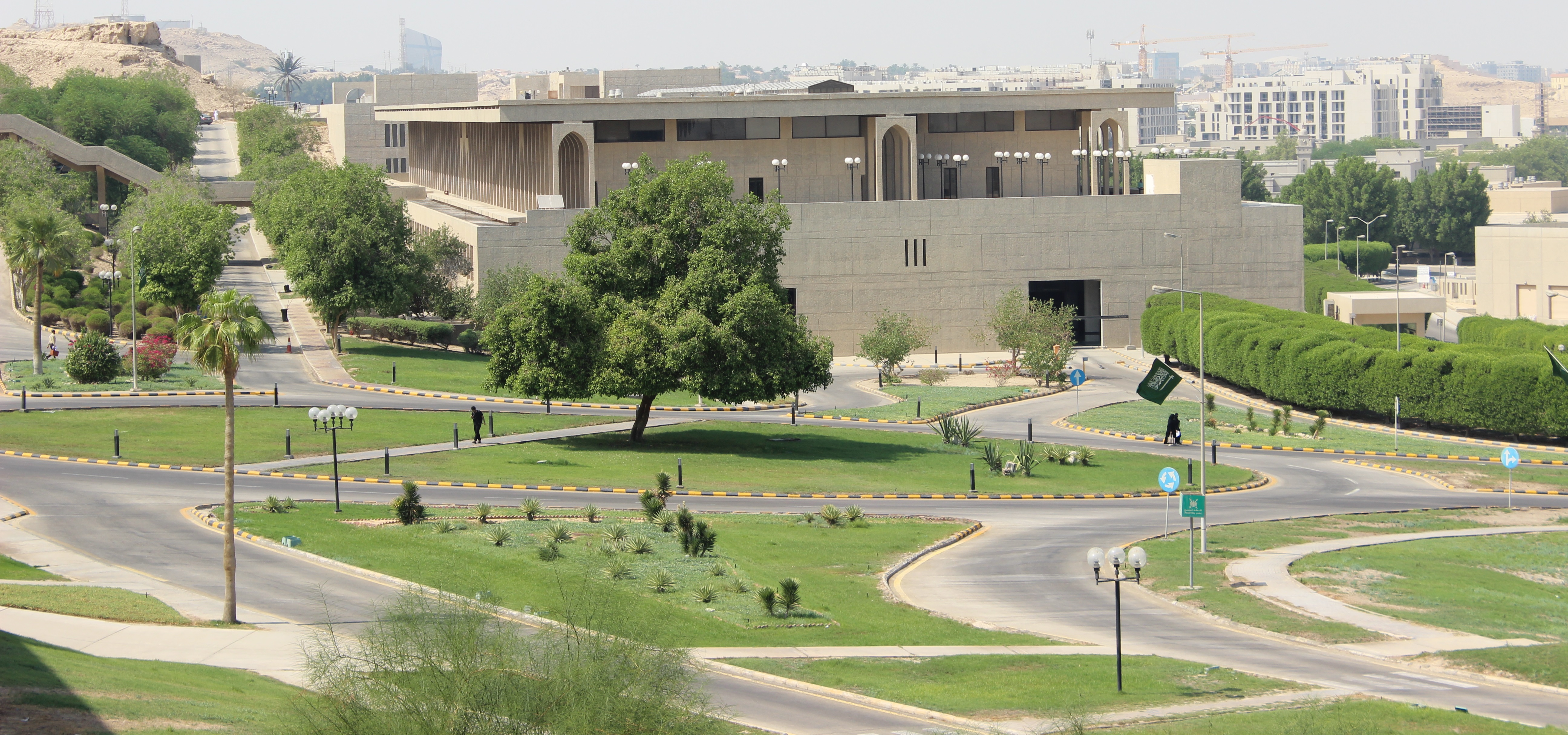
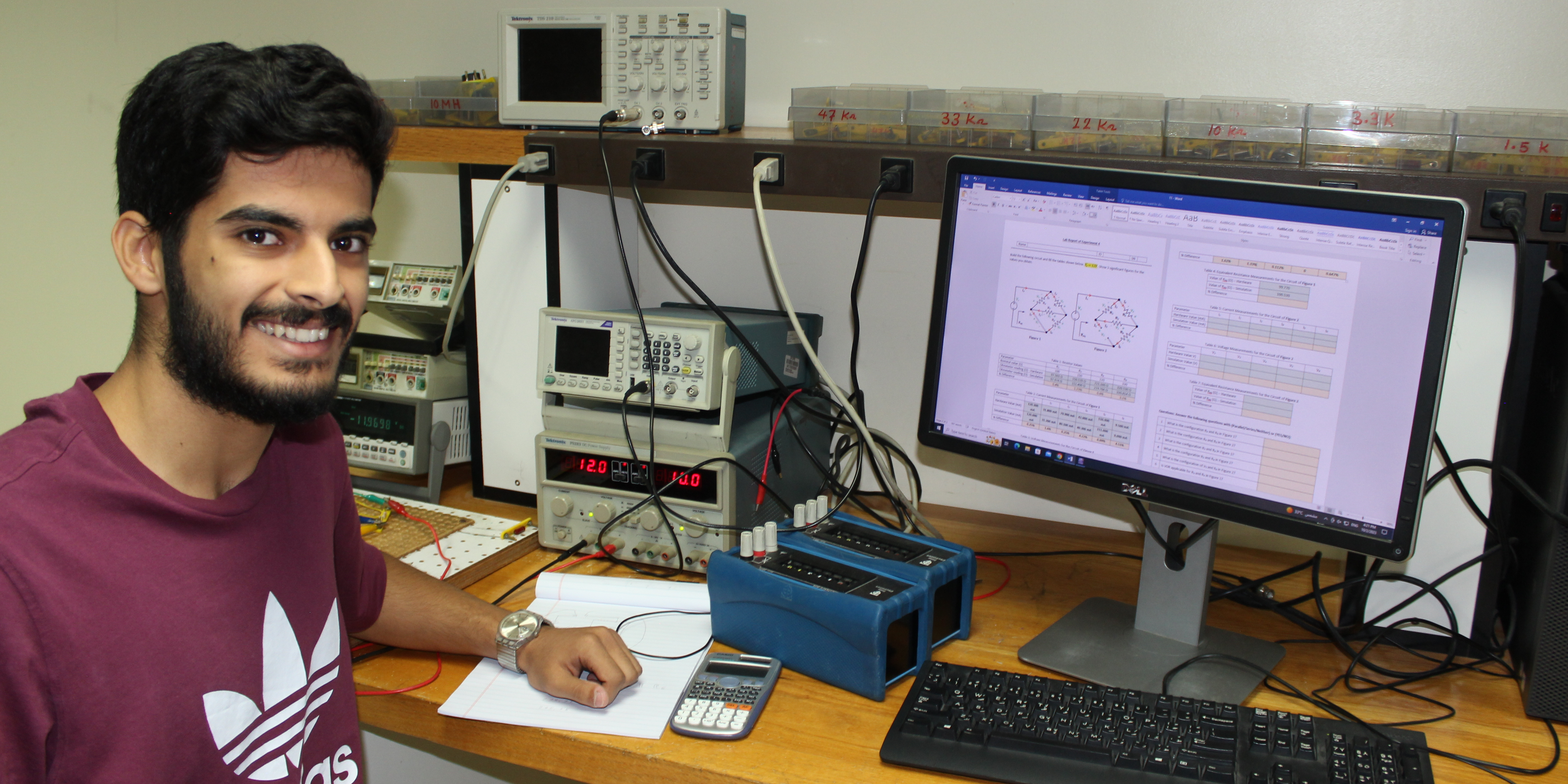

The Electrical Engineering department at KFUPM came into existence with the establishment of the University of Petroleum & Minerals in 1967. It is one of the largest departments in the University with an average number of students being approximately 900, 16% of whom are in the graduate program. The department provides 2 four-year undergraduate programs, Bachelor of Science in Electrical Engineering and Bachelor of Science in Electrical Engineering and Physics. The graduate program offers Master of Science and Master of Engineering in Electrical Engineering, Master of Science in Telecommunication Engineering, Master of Sustainable and Renewable Energy, Master of Wireless Communication Networks, and Ph.D. in Electrical Engineering.
The department has about 61 full-time faculty members in 6 specialized areas of research. The Groups in the department are: Energy Systems, Communications, Electronics, Control Systems, Electromagnetics, and Digital Signal Processing. Additionally, a pool of experienced engineers and technicians maintain more than 30 laboratories in the department.
To be globally known for skillful graduates and quality research with focus on national needs.
On October 13, 2026, the Electrical Engineering Department at King Fahd University of Petroleum & Minerals (KFUPM) hosted a seminar titled “Humidity from Complex Optical Spectra: Micro-Resonator Sensing, Spectral Learning, and Temperature-Aware Fusion,” delivered by Dr. Huda Adnan Zain, Postdoctoral Fellow at the Interdisciplinary Research Center for Communication Systems and Sensing (IRC-CSS).
The seminar explored advanced fibre-optic sensing techniques for reliable humidity monitoring in moisture-sensitive storage and manufacturing environments. Dr. Zain highlighted the advantages of fibre-optic sensors, including their immunity to electromagnetic interference and their ability to operate without electrical components at the sensing location.
The presentation covered experimental studies of relative-humidity sensing using coated fibre-optic microresonators, including microsphere, micro-loop, and microbottle structures. It examined how resonator geometry and coatings influence optical responses to humidity changes and how transmission spectra can be used to distinguish different humidity levels.
The seminar also discussed the use of additional fibre measurements to reduce temperature-related uncertainty in humidity estimation, highlighting the importance of temperature-aware sensing and data-driven spectral interpretation for improving measurement reliability.
Participants gained insights into the design and application of fibre-optic microresonator sensors, as well as emerging approaches that combine optical sensing, functional materials, and data-driven methods for environmental, biomedical, and energy-related monitoring applications.
The following are the highlights of the event:


Quantum Key Distribution Without a Shared Reference Frame
Smart Inverters Under Cyberattack: A Laboratory Demonstration and a Lightweight Defence
The Electrical Engineering Department (EE) at KFUPM provides a world-class education and innovative learning experiences for both undergraduate and graduate students.
Click on the following button to access online admissions application portal :