
The Electrical Engineering department at KFUPM came into existence with the establishment of the University of Petroleum & Minerals in 1967. It is one of the largest departments in the University with an average number of students being approximately 900, 16% of whom are in the graduate program. The department provides 2 four-year undergraduate programs, Bachelor of Science in Electrical Engineering and Bachelor of Science in Electrical Engineering and Physics. The graduate program offers Master of Science and Master of Engineering in Electrical Engineering, Master of Science in Telecommunication Engineering, Master of Sustainable and Renewable Energy, Master of Wireless Communication Networks, and Ph.D. in Electrical Engineering.
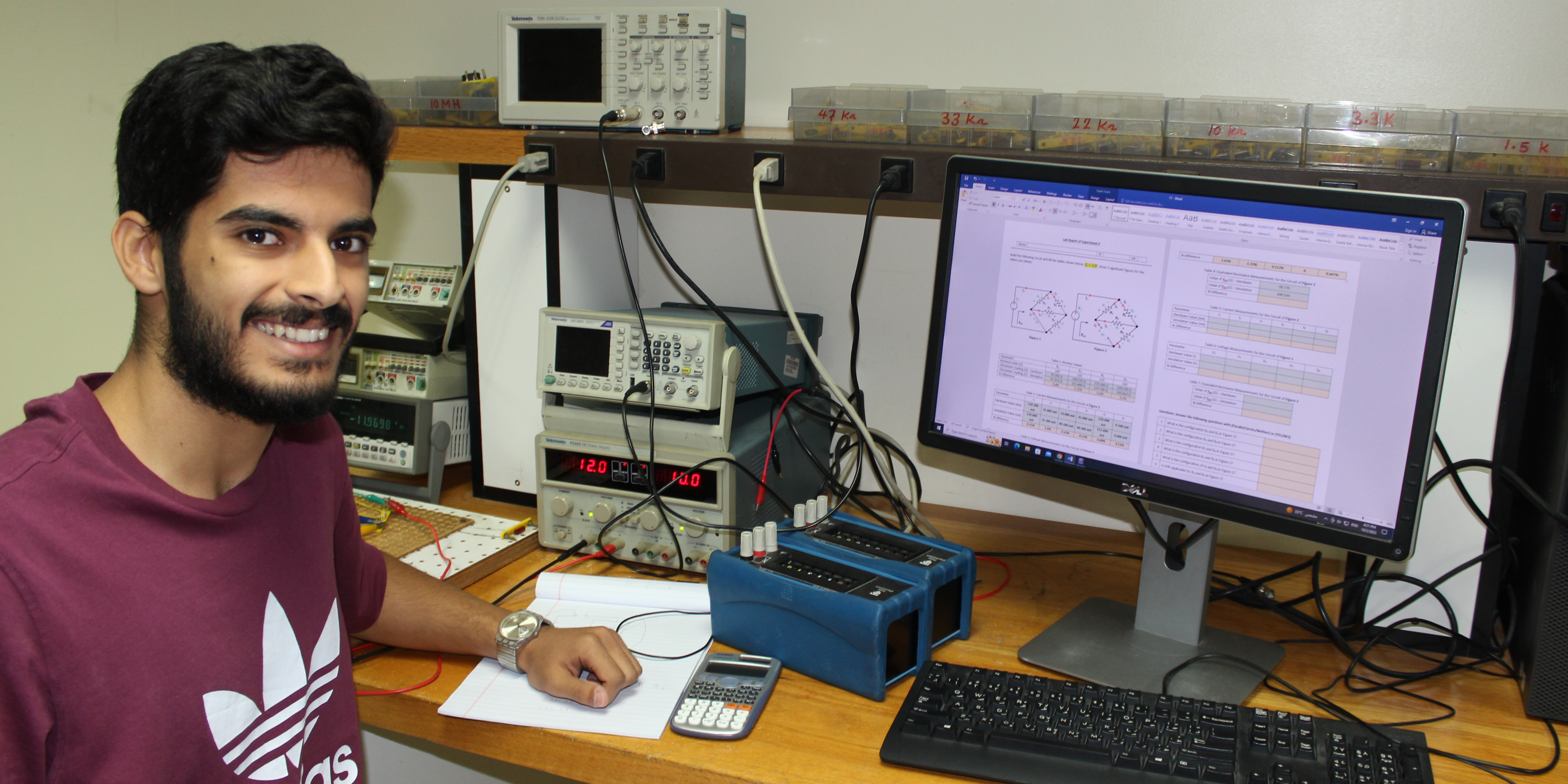
The department has about 61 full-time faculty members in 6 specialized areas of research. The Groups in the department are: Energy Systems, Communications, Electronics, Control Systems, Electromagnetics, and Digital Signal Processing. Additionally, a pool of experienced engineers and technicians maintain more than 30 laboratories in the department.
To be globally known for skillful graduates and quality research with focus on national needs.
On March 3, 2026, the Electrical Engineering Department at KFUPM hosted a seminar titled “An Overview of the Development of Long Range Generation Plan for the Kingdom of Saudi Arabia,” delivered by Mr. Firoz Ahmad (Lecturer, Electrical Engineering Department) in Building 59, Room 1001.
During the seminar, Mr. Ahmad provided an overview of the long-range generation planning process for the electricity sector in the Kingdom of Saudi Arabia. He explained that the objective of this process is to develop a least-cost generation plan based on future demand while maintaining adequate reserve levels to ensure continuity of power supply.
Mr. Ahmad discussed how the study uses STRATEGIST software, which applies dynamic programming to determine the least-cost plan that satisfies reliability indices and reserve constraints. He highlighted key reliability measures and outputs used in planning, including standard indices such as loss-of-load expectation (LOLE), expected unserved energy, and area deficiencies, and noted how these indices can support the development of generation expansion plans. He also touched on how supply-side options—such as unit type and size for candidate expansion—are considered within the planning framework.
The following are the highlights of the event:


RF Rectifier Circuits for Energy Harvesting: Design, Challenges, and Applications
Techno-Economic Optimization of Integrated Energy Hubs under Uncertainty: A Risk-Aware Case Study
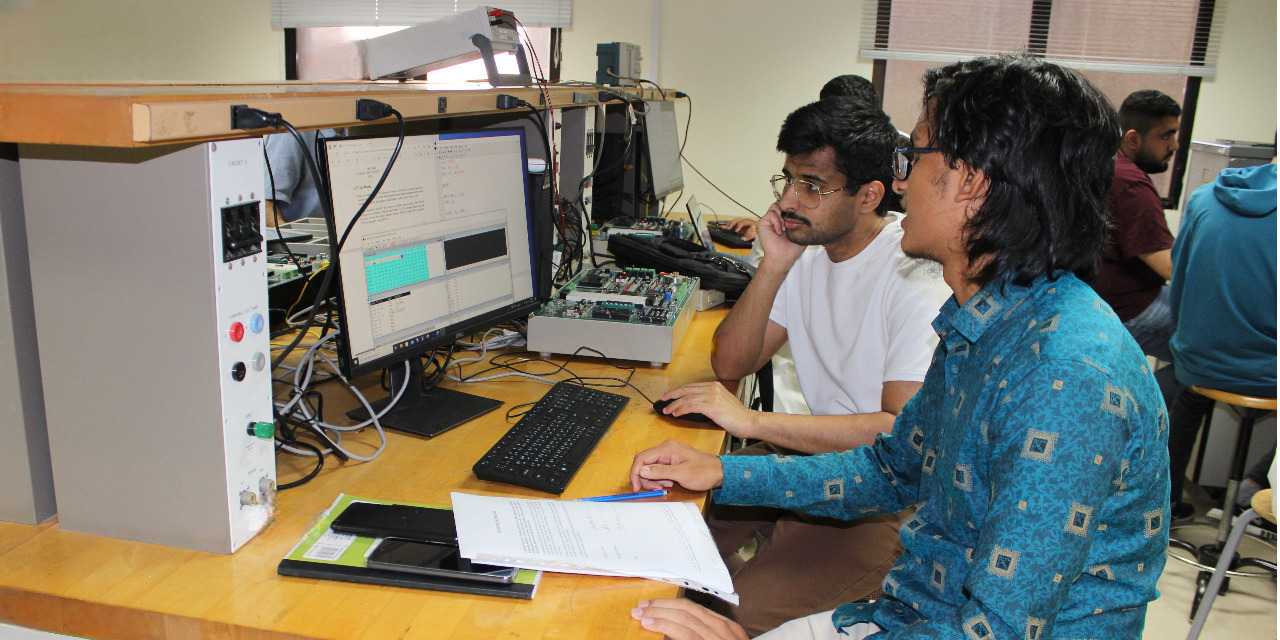
The Electrical Engineering Department (EE) at KFUPM provides a world-class education and innovative learning experiences for both undergraduate and graduate students.
Click on the following button to access online admissions application portal :